Ernst Stavro Blofeld
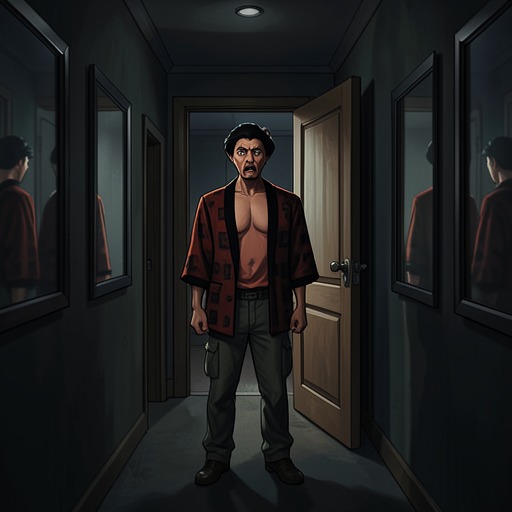
You Only Live TwiceErnst Stavro Blofeld is the calculating criminal mastermind behind SPECTRE and the personal enemy whose murder of Tracy drives James Bond’s mission from intelligence work into blood feud. In Japan, concealed as Dr Guntram Shatterhand, he builds a lethal garden that exploits the country’s suicide culture; when Bond reaches him, Blofeld’s own engineered violence becomes the setting for his death.
Identity and Disguise
Blofeld first enters the account as the super-gangster who killed Tracy, James Bond’s wife for less than a day. Sir James Molony recalls that Bond escaped their earlier encounter with no worse than a blow to the head, but then deteriorated after Tracy’s death and blamed himself for it. M identifies the killer by name, Ernst Stavro Blofeld, while Molony’s account places Blofeld’s act at the beginning of Bond’s psychological collapse. The wound is therefore not merely an element of Bond’s history: it is the personal consequence that later changes the meaning of his pursuit.
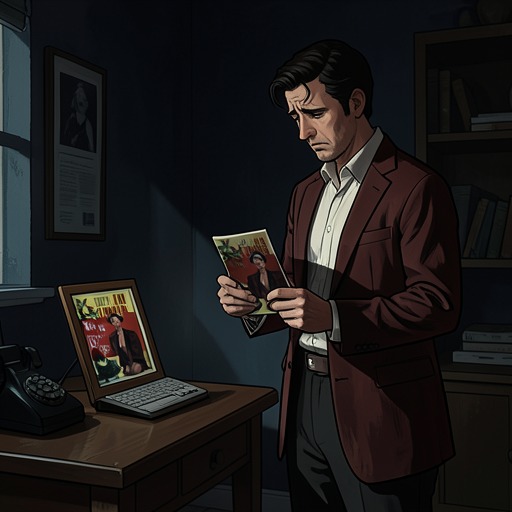
In Japan, Blofeld uses the identity of Dr Guntram Shatterhand, presenting himself as a Swiss doctor and wealthy botanist. Bond recognizes him from an enlarged passport photograph: despite a drooping black moustache, a repaired nose and a gold-capped tooth, the face is unmistakable. The disguise belongs to a cover prepared well before the final retreat. Bond reasons that Shatterhand could have established botanical credentials through gifts of rare plants to famous gardens and the financing of expeditions, while concealing the purpose to which his estate would eventually be put.
The revelation also exposes the scale of Blofeld’s organization and ambition. Bond remembers him as the founder of SPECTRE, the Special Executive for Counter-intelligence, Terrorism, Revenge and Extortion, wanted by police across the NATO countries. His Shatterhand identity is one among the covers he has built over the years; the apparently respectable botanist and the internationally hunted gangster are not separate men, but complementary faces of the same operation.
The Garden and Its Machinery
Blofeld’s estate is designed around death. Bond understands the garden as a place where visitors who want to die can be drawn into a landscape that kills them: a human killing ground disguised as a botanical retreat. In Bond’s assessment, Japan—with its exceptionally high suicide statistics and appetite for the bizarre and terrible—offers Blofeld a particularly effective refuge and audience. The contrast is central to the scheme: a cultivated garden becomes a trap, and a visitor’s apparent freedom to choose death is absorbed into Blofeld’s machinery.
That machinery is both elaborate and practical. Bond associates the plan with fabulous expenditure, meticulous preparation and the use of the Black Dragon Society. The garden’s lethal features include piranhas and volcanic mud, which Blofeld describes as housekeepers because they keep the grounds tidy. He also refers to the sea and sharks as useful, though he acknowledges that sharks do not always finish the job. The disposal system has failed to conceal every death: a spy subjected to the Question Room was found almost intact down the coast. Blofeld worries that a policeman from Fukuoka may learn from local people how many are crossing the wall, since the number is nearly twice that collected by the ambulance. Newspaper criticism and the prospect of a public inquiry threaten to expose the operation despite its carefully managed appearance.
The garden thus reveals both Blofeld’s appetite for spectacle and the administrative attention behind it. He has made murder into a system of entrances, hazards, disposal and counting. Yet the rising number of deaths creates evidence that the system cannot fully control, and the concern about scrutiny shows that even his vast design remains vulnerable to observation beyond the estate.
Recognition and the Personal Feud
Bond’s recognition of Blofeld changes the purpose of the mission at once. Until he sees Shatterhand’s photograph, he is working with Tiger Tanaka and the Japanese authorities; after the identification, he treats the matter as a private reckoning rather than a task connected to Tiger or Japan. He asks whether the Black Dragon agent who followed Tiger could have reported Bond’s description or purpose to his master. The agent’s diary records only an assignment to follow Tiger to his destination and report back, making it unlikely that Blofeld has been alerted to Bond’s arrival. The pause between discovery and action gives Bond time to insist on secrecy while he turns toward his former enemy.
Blofeld and Irma Bunt are later shown walking through the grounds and inspecting the results of the estate’s violence. When Bond is brought before them disguised as a deaf-mute miner, Blofeld does not immediately accept that he is the English agent. Irma studies Bond at close range, notices the scar on his right cheek and the upward tilt of his eyebrows, and identifies him as the man who used the name Sir Hilary Bray. She also connects him directly to the death of Tracy. Blofeld sees a resemblance but asks how Bond found him and who sent him. His uncertainty contrasts with Irma’s certainty: she recognizes the evidence on Bond’s face, while Blofeld first interprets the captive through the questions of intelligence and conspiracy.
The Question Room and Death
Blofeld’s Question Room turns interrogation into a timed execution threat. Bond is seated on a stone throne above a periodic geyser, with volcanic mud capable of reaching around one thousand degrees Centigrade and shooting roughly one hundred feet into the air. The seat stands about fifty feet above the source; a circular opening in the ceiling and the muddy stonework make the mechanism part of the room itself. Blofeld explains that the geyser erupts at exactly fifteen minutes past each hour. Bond has eleven minutes before the next eruption: remaining seated would risk incineration, while leaving would prove that he can hear and understand, exposing his supposed deaf-muteness and inviting further torture.
The trap makes Blofeld’s method explicit. He uses engineered danger not only to kill but to force a response, with the captive’s smallest movement serving as evidence. Yet the room’s elaborate control does not secure his victory. In the final confrontation, Bond strikes Blofeld’s legs and shoulder with a stave, but Blofeld’s sword cuts the weapon shorter and drives Bond back against a wall. Bond narrowly avoids the blade at his stomach, then lunges for Blofeld’s neck. As the sword falls, Bond keeps his hands on Blofeld’s throat until Blofeld’s tongue protrudes and his eyes roll upward. Bond continues to kneel over him, gripped by blood lust, before slowly returning to himself.
Blofeld’s death is followed by the destruction of part of his machinery and Bond’s escape. Bond takes Blofeld’s sword, opens a mud-spattered box beside the throne and turns the large wheel inside until it is closed. With guards blocking the passage, he smashes a window and climbs out onto the terrace, taking Blofeld’s kimono from the corpse for clothing. The killing therefore ends the personal contest but does not instantly undo the danger Blofeld has built: Bond must still act within the castle, shut down the mechanism and find a way out.
Narrative Significance
Blofeld is presented through a tension between calculation and derangement. Bond sees the garden as the product of a monstrous, grand-scale imagination, but its operations are meticulous: rare-plant credentials support the cover, guards patrol a vast property, the dead are counted, and the Question Room runs by a precise timetable. The same combination makes Blofeld more than a concealed target. His refuge externalizes the destructive system he has constructed, while the practical flaws in disposal and secrecy show that even its author cannot make it invulnerable.
His final encounter with Bond also reverses the roles built into that system. Blofeld has arranged the Question Room so that a prisoner’s body will either reveal information or be destroyed; in the end, physical struggle rather than interrogation decides the outcome. Bond kills him not as an abstract intelligence objective but as the man responsible for Tracy’s death. The personal motive that brings Bond to the castle is thus fulfilled in the most direct possible way, even as his escape requires one last act of practical attention to the machinery Blofeld left behind.